How to build study habits that actually stick
PrepLab team · 26 Oct 2026
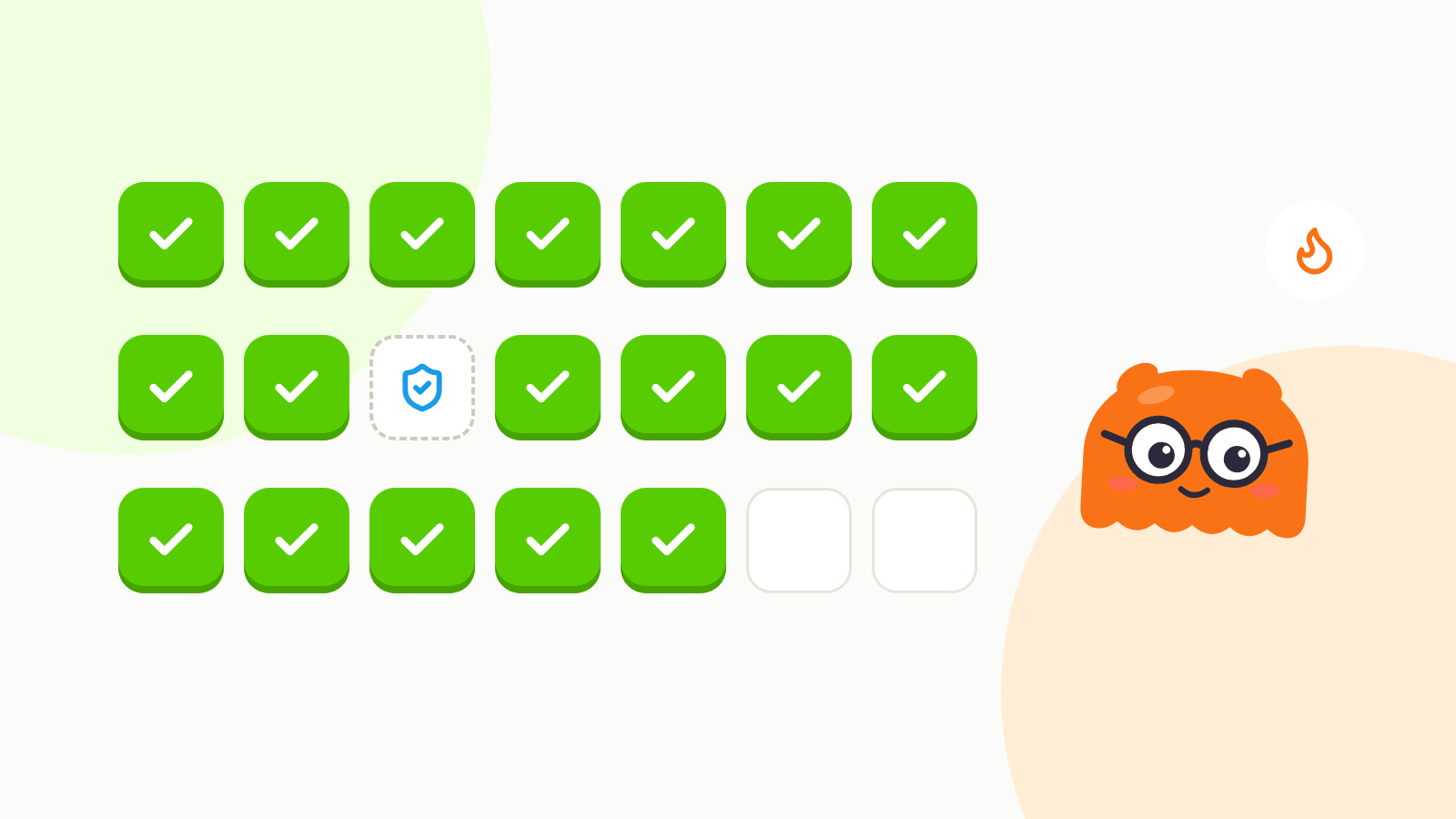
Every year-end holiday, someone in your class decides that next year will be different. Study every day. Start early. No more mugging the night before. By the March holidays, it's back to cramming.
That's not a willpower problem. It's usually a plan problem. If you want to know how to build study habits that last, habit research has some surprisingly clear answers, and none of them involve waking up at 5am.
How long does a habit take?
The best-known study on this is by Lally, van Jaarsveld, Potts and Wardle, published in the European Journal of Social Psychology in 2010. They asked 96 volunteers to pick one small eating, drinking or exercise habit and do it every day in the same situation, like "after breakfast", for 12 weeks. 82 of them gave enough data to analyse [1].
The headline result: "The time it took participants to reach 95% of their asymptote of automaticity ranged from 18 to 254 days" (Lally et al., European Journal of Social Psychology, 2010) [1].
In plain words: the point where the habit felt close to automatic took anywhere from under three weeks to over eight months, depending on the person and the habit.
You'll often see a figure of about 66 days quoted from this study [2]. That's more than nine weeks. The British Psychological Society's Research Digest also reported that exercise habits took about one and a half times as long as eating or drinking ones [2].
A few honest caveats. The volunteers were adults building health habits, not students revising. The study ran for 84 days, so the 254-day figure is a projection. And the researchers' model fitted well for only 39 of the people [1].
What you can take from it: the popular "21 days to a habit" doesn't come from this study. The fastest person took 18 days, and the range ran all the way to 254. Plan for weeks to months.
Missing one day doesn't break it
This is the most useful line in the whole paper: "Missing one opportunity to perform the behaviour did not materially affect the habit formation process" (Lally et al., 2010) [1].
People who were more consistent did fit the habit curve better [1]. So consistency matters. But one missed day after a CCA camp, a family trip to JB or a night you were just wiped out doesn't send you back to zero. The real risk is letting one missed day turn into a missed week. Start again the next day.
Same time, same place
Habits don't float around in your head. They're attached to situations.
Wood and Rünger reviewed the research in the Annual Review of Psychology in 2016 and found that "people tend to repeat the same behaviors in recurring contexts" [3]. Repeat the same thing in the same setting enough times and it becomes your default.
An earlier pair of diary studies by Wood, Quinn and Kashy (Journal of Personality and Social Psychology, 2002) found that habits done almost daily in a stable setting came with less stress, and left people free to think about other things [4]. That's the goal: studying that doesn't need a daily argument with yourself.
So pick an anchor you already have every day:
- after dinner, at your desk
- after you shower on CCA days
- on the bus home from school, one short set on your phone
- right after tuition, while the topic is still fresh
The anchor matters more than the clock time. "7.30pm" moves around when CCA runs late. "After dinner" doesn't.
Write an if-then plan
This is the trick with the strongest evidence behind it.
The psychologist Gollwitzer named it the implementation intention: a plan in the form "if situation Y happens, then I will do X" (American Psychologist, 1999) [5]. Instead of "I'll study more", you decide exactly when and what.
Gollwitzer and Sheeran later combined 94 independent tests of these plans. They found that "implementation intentions had a positive effect of medium-to-large magnitude (d = .65) on goal attainment" (Gollwitzer and Sheeran, Advances in Experimental Social Psychology, 2006) [6]. In plain words: people who wrote if-then plans reached their goals noticeably more often. Most of the people tested were adults with all kinds of goals, so it isn't a study-specific result, but it's one of the more solid findings in the field.
Some if-then plans that fit a Singapore school week:
- If it's a CCA day, then I do one short set after I shower.
- If I get home from tuition, then I redo the questions I got wrong before I open Instagram.
- If I sit down at my desk, then my phone goes on the charger in the living room.
- If I miss a day, then I do the same thing the next day, not double.
You might have seen this called habit stacking. James Clear's formula is "After/Before [CURRENT HABIT], I will [NEW HABIT]", which he credits to BJ Fogg's Tiny Habits [7]. That's a blog idea rather than a study, but it's the same thing as an if-then plan.
Make it small enough to do every day
Lally's volunteers picked one simple eating, drinking or exercise habit each [1]. Small and daily beats big and occasional. You're not training to sit for three hours. You're training to start.
Fifteen minutes on a school night is enough to build the habit. On a free Saturday, you can always do more. The habit is the sitting down, not the length.
Streaks help, if they forgive you
Streaks work on most of us. Silverman and Barasch ran seven studies on this (Journal of Consumer Research, 2022). Showing people an unbroken streak made them more likely to keep going than showing them a broken one. But the drop after a broken streak was smaller when people could repair it [8].
Those studies were about things like fitness and learning apps, and they measured short-term behaviour, so they're not proof about exam results. They do match what Lally found, though: a missed day shouldn't feel like the end.
This is how PrepLab's Daily Ring works. One activity a day keeps your streak going, and streak saves cover a missed day: 2 a month on the free plan, 5 a month on Premium. A practice set takes about 15 minutes, so it fits the "small and daily" rule. We don't have our own data yet on whether PrepLab builds habits, but the design lines up with the research above.
Don't build a habit that eats your sleep
The CDC recommends 8 to 10 hours of sleep a night for teens aged 13 to 17 [9]. A Singapore survey of 1,225 teens by Yeo and colleagues (Sleep Health, 2020) found that those who studied more slept less [10].
A study habit that only works at 1am isn't a good habit. If your slot keeps pushing into the night, move it earlier or make it shorter. Since January 2026, school-issued learning devices go into sleep mode at 10.30pm by default [11], so that's a natural cut-off.
Start before school does
The year-end holidays, especially before Sec 1 or Sec 3, are the easiest time to start. There's no CCA, no homework and no tests, so the habit can form before the busy part of the year.
- Pick your anchor. One thing you already do every day.
- Write one if-then plan. Put it on your phone's lock screen or a sticky note on your desk.
- Keep it to 15 minutes. Small enough that you'd feel silly skipping it.
- Expect a miss. When it happens, restart the next day.
- Keep going past the point where it's fun. Think weeks to months, not three weeks.
By the time school starts, the slot already exists. You just keep it.
Short daily sets with your friends, and every mistake saved to try again. Free to download on iPhone. Download on the App Store
Sources
All accessed 2026-11-15.
- Lally, van Jaarsveld, Potts & Wardle (2010). European Journal of Social Psychology, 40(6), 998–1009. https://doi.org/10.1002/ejsp.674
- BPS Research Digest, 2010-10-06. https://bps.org.uk/research-digest/how-form-habit
- Wood & Rünger (2016). Annual Review of Psychology, 67. https://doi.org/10.1146/annurev-psych-122414-033417
- Wood, Quinn & Kashy (2002). Journal of Personality and Social Psychology, 83(6). https://doi.org/10.1037/0022-3514.83.6.1281
- Gollwitzer (1999). American Psychologist, 54(7), 493–503. https://doi.org/10.1037/0003-066X.54.7.493
- Gollwitzer & Sheeran (2006). Advances in Experimental Social Psychology, 38, 69–119. https://doi.org/10.1016/S0065-2601(06)38002-1
- James Clear. Habit stacking. https://jamesclear.com/habit-stacking
- Silverman & Barasch (2022). Journal of Consumer Research. https://doi.org/10.1093/jcr/ucac029
- CDC, About Sleep (page reviewed 2024-05-15). https://www.cdc.gov/sleep/about/index.html
- Yeo, Tan, Lo, Chee & Gooley (2020). Sleep Health. https://doi.org/10.1016/j.sleh.2020.04.011
- MOE press release, 2025-11-30. https://www.moe.gov.sg/news/press-releases/20251130-moe-to-introduce-enhanced-measures-to-promote-healthier-screen-use-in-students